
Key Takeaways
- EOR insurance provides comprehensive coverage for businesses using Employer of Record services, protecting against employment-related liabilities and compliance risks
- Professional liability, workers’ compensation, and employment practices liability insurance are core components of EOR insurance packages
- EOR insurance coverage varies by provider and jurisdiction, typically including general liability, cyber liability, and errors & omissions protection
- Businesses using EOR services should verify insurance coverage levels and ensure adequate protection for their global workforce operations
- EOR insurance costs depend on factors like employee count, industry risk level, geographic coverage, and claims history
When expanding globally through employer of record services, comprehensive insurance coverage becomes a critical component of your risk management strategy. As businesses increasingly rely on professional employer organization arrangements to hire talent worldwide without establishing local entities, understanding the insurance landscape becomes essential for protecting your operations and maintaining legal compliance across multiple jurisdictions.
The complexity of global employment brings unique challenges that traditional business insurance may not adequately address. From navigating local employment laws to managing workers’ compensation requirements across different countries, the risks associated with international hiring require specialized coverage designed specifically for EOR arrangements.
This comprehensive guide explores everything you need to know about EOR insurance, from basic coverage types to country-specific requirements, helping you make informed decisions about protecting your global team while minimizing financial risks and ensuring robust legal compliance throughout your international expansion journey.
What is EOR Insurance?
EOR insurance refers to specialized insurance coverage designed specifically for employer of record arrangements and global employment services. This comprehensive protection addresses the unique risks that arise when businesses use EOR providers to employ workers in countries where they don’t have established legal entities.

The primary purpose of EOR insurance is to protect both EOR providers and their clients from employment-related risks, compliance violations, and operational liabilities that can occur across multiple jurisdictions. Unlike standard business insurance, EOR insurance coverage is specifically tailored to address the complexities of international employment, including varying labor laws, workers’ compensation requirements, and employment practices regulations.
EOR insurance serves as a vital tool for businesses expanding globally without the complexity and expense of business registration in each target market. When you engage an EOR provider, you’re essentially transferring legal responsibility for employment compliance to that organization, but you still need assurance that adequate insurance protection exists to cover potential claims and violations.
The coverage typically includes protection against employment law violations, workplace injuries, professional errors in payroll processing and benefits administration, and data breaches involving sensitive employee data. This comprehensive approach ensures that both the EOR provider and their clients maintain protection against the wide range of risks inherent in global employment operations.
For companies using EOR services, understanding the insurance coverage provided by their EOR partner is crucial for maintaining thorough understanding of risk exposure and ensuring adequate protection for their business needs. The insurance framework should address local compliance requirements while providing consistent coverage standards across all operating jurisdictions.
Types of EOR Insurance Coverage
Understanding the various types of insurance coverage available through EOR arrangements helps businesses evaluate providers and ensure comprehensive protection for their global operations. Each coverage type addresses specific risks and regulatory requirements that vary significantly across different countries and employment scenarios.
Professional Liability Insurance
Professional liability insurance represents one of the most critical components of EOR insurance packages, protecting against errors and omissions in service delivery that could result in financial losses for clients or employees. This coverage addresses mistakes in payroll processing, incorrect tax filings, benefits administration errors, and contract interpretation disputes that can arise in complex global employment arrangements.
The scope of professional liability coverage typically includes protection against claims arising from incorrect tax withholdings, miscalculated overtime payments, errors in retirement plans administration, and failures to comply with local employment laws. Coverage limits generally range from $1 million to $10 million per claim, depending on the EOR provider’s size and risk profile.
This insurance becomes particularly important when managing statutory benefits across multiple jurisdictions, where differences in local employment laws can create opportunities for costly mistakes. Professional liability coverage ensures that when errors occur in the complex process of managing international employment, adequate financial protection exists to address resulting claims and maintain business continuity.
The reimbursement process under professional liability insurance typically covers legal defense costs, settlement payments, and direct financial losses resulting from covered errors. This protection is essential for maintaining client confidence and ensuring that professional mistakes don’t result in catastrophic financial consequences for either the EOR provider or their clients.
Employment Practices Liability Insurance (EPLI)
Employment Practices Liability Insurance provides crucial protection against claims related to wrongful termination, discrimination, harassment, and other workplace violations that can occur across global operations. This coverage is particularly important for EOR arrangements because employment laws vary dramatically between countries, creating complex compliance challenges that increase litigation risk.
EPLI coverage addresses claims involving violations of local employment laws, including wage and hour disputes, discrimination based on protected characteristics, sexual harassment allegations, and retaliation claims following employee complaints. The insurance typically covers legal defense costs, settlement payments, and judgments arising from covered employment practices violations.

Coverage limits for EPLI in EOR arrangements often range from $1 million to $5 million per claim, with aggregate annual limits that may reach $10 million or more for larger EOR providers. The coverage is designed to address the heightened litigation risk that comes with employing workers across multiple legal systems with varying employee protection standards.
Understanding patient’s coverage details becomes crucial when evaluating EPLI protection, as exclusions and limitations can significantly impact the effectiveness of coverage during actual claims. The insurance should provide adequate protection for the specific jurisdictions where your EOR provider operates and address the particular employment law risks present in those markets.
Workers’ Compensation Insurance
Workers’ compensation insurance is mandatory in most jurisdictions and provides coverage for workplace injuries and occupational illnesses affecting employees. For EOR arrangements, this coverage must comply with local workers’ compensation requirements in each country where employees are based, creating a complex web of insurance obligations.
The coverage typically includes medical expenses, disability benefits, lost wages, and rehabilitation costs for employees who suffer work-related injuries or illnesses. EOR providers must maintain workers’ compensation coverage that meets or exceeds minimum requirements in all operating jurisdictions, ensuring compliance with local employment laws and providing adequate protection for injured workers.
Workers’ compensation requirements vary significantly between countries, with some jurisdictions requiring coverage through government-run systems while others allow private insurance arrangements. EOR providers must navigate these differences while ensuring continuous coverage for all employees regardless of their location or the nature of their work arrangements.
The claims process for workers’ compensation typically involves immediate medical care provision, income replacement during recovery periods, and long-term disability support when necessary. EOR providers should maintain detailed billing records and claim submission procedures to ensure prompt processing of workers’ compensation claims and compliance with local reporting requirements.
General Liability Insurance
General liability insurance protects against third-party claims for bodily injury, property damage, and personal injury that may occur during work-related activities. This coverage is essential for EOR arrangements because employees may work at various client locations or interact with third parties in ways that could result in liability claims.
The coverage typically includes protection against accidents occurring at client workplaces, property damage caused by employees during work activities, and personal injury claims such as defamation or invasion of privacy. Coverage limits usually range from $1 million to $2 million per occurrence, with aggregate annual limits that provide additional protection against multiple claims.
For businesses using EOR services, general liability coverage provides important protection when employees work on client premises or interact with customers and vendors. The insurance should cover incidents that occur anywhere employees perform work duties, ensuring comprehensive protection regardless of work location or client arrangements.
The policy should also address coverage for remote work situations, which have become increasingly common in global employment arrangements. As more employees work from home offices or co-working spaces, general liability coverage must evolve to address the unique risks associated with distributed work environments.
Cyber Liability Insurance
Cyber liability insurance has become increasingly critical for EOR providers given their responsibility for handling sensitive employee data across multiple countries with varying data protection requirements. This coverage protects against data breaches, cyberattacks, and privacy violations that could expose personal employee information or disrupt business operations.
The coverage typically includes first-party costs such as breach notification expenses, credit monitoring services for affected employees, and system restoration costs following cyberattacks. Third-party coverage addresses regulatory fines, legal defense costs, and settlements arising from privacy violations or data security failures.
With the implementation of stringent data protection regulations like GDPR in Europe and similar laws in other jurisdictions, cyber liability insurance has become essential for EOR providers managing employee data across international borders. The insurance should provide adequate coverage for regulatory fines and penalties that can reach millions of dollars for serious data protection violations.
Coverage should also address the unique risks associated with managing human resources data across multiple countries, including employee lifecycle information, payroll data, and benefits administration records. The policy should provide protection for both intentional attacks and accidental data exposures that could result in significant financial and reputational damage.
How EOR Insurance Works
Understanding the operational mechanics of EOR insurance helps businesses evaluate coverage effectiveness and ensure proper protection for their global employment arrangements. The insurance framework must coordinate across multiple jurisdictions while providing seamless coverage for various employment scenarios and claim types.
Coverage Activation and Claims Process
EOR insurance coverage typically activates immediately when employment begins through the EOR provider, ensuring that protection exists from the first day of the employment relationship. The activation process involves verifying that the employee’s location and job duties fall within the policy’s coverage scope and that all necessary local insurance requirements are met.
When incidents occur that may result in insurance claims, the reporting process must be initiated promptly to ensure coverage eligibility and proper claim handling. Most EOR insurance policies require claim notification within 30 to 60 days of the incident or when the EOR provider becomes aware of circumstances that could lead to a claim.
The claims process involves coordination between the EOR provider, insurance carriers, and often local legal counsel who understand the specific employment laws and insurance regulations in the affected jurisdiction. Insurance carriers investigate claims by reviewing relevant documentation, interviewing witnesses, and assessing liability under applicable laws and policy terms.
Settlement negotiations and payments are handled by insurance companies within established policy limits, with the EOR provider typically managing communication with affected employees and clients. This process ensures that claims are resolved efficiently while maintaining compliance with local legal requirements and protecting all parties’ interests throughout the resolution process.
Multi-Jurisdiction Coverage Coordination
EOR insurance providers must coordinate coverage across multiple countries and legal systems, ensuring that protection meets local requirements while maintaining consistent coverage standards. This coordination involves working with global insurance networks, local insurance providers, and regulatory authorities to create comprehensive protection that addresses the unique challenges of international employment.
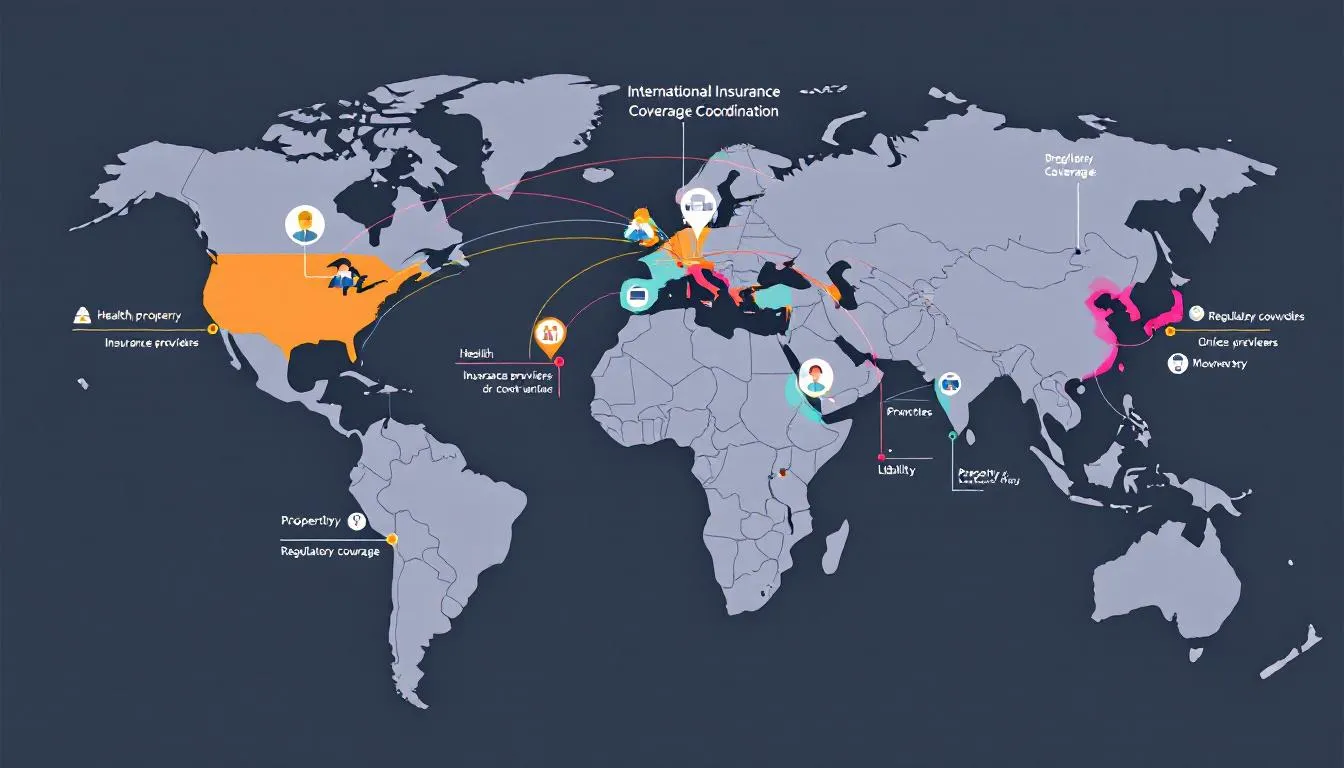
The coordination process requires detailed understanding of local insurance requirements, employment laws, and regulatory environments in each operating jurisdiction. EOR providers typically work with international insurance brokers and carriers who specialize in global coverage and maintain relationships with local insurers in target markets.
Coverage gaps must be minimized through careful policy design and coordination between different insurance providers and regulatory systems. This may involve purchasing local insurance policies to supplement global coverage or working with international carriers who can provide consistent coverage across multiple jurisdictions through their global networks.
The communication tool function of modern insurance platforms enables real-time coordination between different coverage providers and jurisdictions, ensuring that claims are handled efficiently and that coverage remains current as employees move between locations or change roles within the organization.
Benefits of EOR Insurance
The advantages of comprehensive EOR insurance extend beyond basic risk protection, providing strategic benefits that support business growth, financial performance, and operational efficiency in global markets. Understanding these benefits helps businesses evaluate the true value of EOR insurance investments and make informed decisions about coverage levels and provider selection.
Risk Transfer and Protection
EOR insurance provides effective risk transfer mechanisms that shift employment-related liabilities from clients to EOR providers backed by comprehensive insurance coverage. This transfer protects businesses from unpredictable employment law changes, compliance violations, and workplace incidents that could result in significant financial losses or legal complications.
The protection extends to areas where businesses may lack expertise or resources to manage risks effectively, such as understanding complex labor laws in foreign jurisdictions or maintaining compliance with rapidly changing employment regulations. EOR insurance ensures that expert risk management and financial protection are in place even when businesses lack local legal expertise or established compliance processes.
Financial exposure reduction represents a huge benefit for companies expanding into new markets where employment law violations can result in substantial penalties, legal costs, and reputational damage. The insurance provides a safety net that allows businesses to pursue growth opportunities without exposing themselves to catastrophic financial risks that could threaten their overall business stability.
The peace of mind that comes with comprehensive EOR insurance coverage enables businesses to focus on core operations and growth strategies rather than worrying about employment compliance and risk management in unfamiliar legal environments. This psychological benefit often translates into more aggressive growth strategies and faster international expansion timelines.
Cost-Effective Risk Management
EOR insurance typically provides more cost-effective risk management than purchasing individual insurance policies for each jurisdiction where a business operates. The group buying power of EOR providers enables access to better coverage terms and lower premiums than individual businesses could typically obtain on their own.
The economies of scale achieved through EOR insurance arrangements result in lower per-employee insurance costs compared to establishing individual coverage in each target market. This cost efficiency becomes particularly pronounced for smaller businesses that lack the employee count or premium volume to negotiate favorable insurance terms independently.
Administrative burden reduction represents another significant cost benefit, as EOR providers handle all aspects of insurance management, including policy procurement, renewal negotiations, and claims administration. This eliminates the need for businesses to research local insurance requirements, manage multiple policy relationships, and coordinate coverage across different jurisdictions.
The elimination of duplicate coverage and gaps between policies also provides cost savings by ensuring that insurance spending is optimized and that businesses aren’t paying for unnecessary coverage while maintaining adequate protection levels across all operating locations and employment scenarios.
Compliance and Legal Protection
EOR insurance ensures compliance with local insurance requirements for employment in each jurisdiction, addressing mandatory coverage types and minimum coverage limits that vary significantly between countries. This compliance protection helps businesses avoid penalties, legal complications, and operational disruptions that could result from inadequate insurance coverage.
Access to local legal counsel and employment law expertise through EOR insurance providers ensures that businesses have professional support when dealing with employment disputes, regulatory investigations, or compliance questions. This expertise is particularly valuable for businesses operating in jurisdictions where they lack established legal relationships or deep understanding of local employment law requirements.
The support for rapid resolution of employment disputes and regulatory issues helps minimize business disruption and financial exposure when problems arise. EOR insurance providers typically maintain relationships with local legal counsel and regulatory authorities that enable efficient problem resolution and compliance management.
Coverage continuity during employment law changes and regulatory updates ensures that businesses remain protected even as legal requirements evolve in different jurisdictions. EOR providers monitor regulatory changes and adjust coverage as needed to maintain compliance and adequate protection levels without requiring constant attention from their clients.
EOR Insurance Requirements by Country
Understanding specific insurance requirements across different jurisdictions is essential for evaluating EOR providers and ensuring adequate protection for global operations. Insurance mandates vary significantly between countries, reflecting different legal systems, social insurance programs, and regulatory approaches to employment protection.
United States Requirements
The United States presents a complex regulatory environment where insurance requirements vary significantly between states, creating challenges for EOR providers operating across multiple jurisdictions. Workers’ compensation insurance is mandatory in all states except Texas, where coverage is optional but strongly recommended due to potential liability exposure for workplace injuries.
State unemployment insurance and disability insurance requirements add additional layers of mandatory coverage that EOR providers must maintain to ensure legal compliance for their clients. These requirements often involve both insurance coverage and direct contributions to state-administered programs that provide benefits to eligible workers.
Employment Practices Liability Insurance, while not legally mandatory, is strongly recommended due to the high litigation risk and complex employment law environment in the United States. The country’s employment-at-will doctrine, combined with extensive federal and state anti-discrimination laws, creates significant exposure to wrongful termination and discrimination claims.
Cyber liability insurance has become increasingly important for EOR providers operating in the United States due to growing regulatory requirements for data protection and the high costs associated with data breaches. Many states have enacted data breach notification laws that require specific response procedures and may impose financial penalties for inadequate data security.
European Union Requirements
The European Union operates under a comprehensive framework of employment protection laws that create specific insurance requirements for EOR providers operating across member states. Workers’ compensation or equivalent accident insurance is mandatory in all EU countries, though the specific requirements and coverage levels vary between member states.
Social security contributions represent a significant component of employment costs in EU countries, with EOR providers required to make contributions for unemployment insurance, health insurance, and pension programs. These contributions are typically calculated as percentages of employee wages and vary significantly between countries.
GDPR compliance requires comprehensive cyber liability coverage to address potential fines and penalties for data protection violations. The regulation allows for fines up to 4% of global annual revenue or €20 million, whichever is higher, making adequate cyber liability insurance essential for EOR providers handling employee data across EU member states.
Professional liability insurance is recommended for EOR service providers operating in the EU due to the complex regulatory environment and the potential for costly mistakes in payroll processing, tax filings, and benefits administration across multiple legal systems with different requirements.
Asia-Pacific Requirements
The Asia-Pacific region presents diverse insurance requirements that reflect the variety of legal systems, economic development levels, and regulatory approaches across the region. Workers’ compensation requirements vary significantly between countries, with some jurisdictions like Australia requiring comprehensive coverage while others have more limited mandatory requirements.

Mandatory provident fund contributions in countries like Hong Kong and Malaysia create additional insurance and benefit obligations that EOR providers must manage. These programs typically require both employer and employee contributions to retirement savings programs administered by government agencies or approved private providers.
Local employment liability insurance is required in several Asia-Pacific jurisdictions, including Australia, where comprehensive employment practices coverage is necessary to address the country’s extensive employment protection laws and active regulatory enforcement environment.
Data localization laws in countries like China require specific approaches to cyber liability coverage and may limit the ability to transfer employee data outside the country. EOR providers must ensure that their insurance coverage addresses these restrictions while providing adequate protection for data security incidents and regulatory violations.
Choosing the Right EOR Insurance Provider
Selecting an appropriate EOR insurance provider requires careful evaluation of coverage adequacy, provider capabilities, and long-term reliability. The decision impacts not only immediate insurance protection but also the overall success of global employment strategies and long-term business growth plans.
Coverage Evaluation Factors
Verifying that insurance coverage limits meet or exceed local minimum requirements in all operating jurisdictions represents the foundation of provider evaluation. Coverage adequacy must be assessed not only for current operations but also for planned expansion into additional markets where requirements may differ significantly from existing locations.
Assessment of coverage for emerging risks like cyber liability, remote work injuries, and pandemic-related claims has become increasingly important as work arrangements evolve and new risk categories emerge. EOR providers should demonstrate that their insurance programs adapt to changing risk environments and maintain current coverage for evolving employment scenarios.
Review of policy exclusions and limitations requires careful attention as these factors can significantly impact coverage effectiveness during actual claims. Common exclusions might include intentional acts, criminal behavior, or specific types of employment practices that could leave businesses exposed to significant financial risks if not properly addressed.
Confirmation that insurance carriers maintain strong financial ratings from agencies like A.M. Best ensures that coverage will be available when claims occur. A minimum rating of A- or higher is generally recommended to provide confidence in the carrier’s ability to pay claims and maintain operations during economic downturns or periods of high claim activity.
Provider Assessment Criteria
Evaluation of the EOR provider’s claims experience and insurance claim settlement history provides insight into their risk management practices and the likelihood of smooth claims processing when incidents occur. Providers with extensive claims experience and positive settlement histories typically offer more reliable protection and better claims support.
Assessment of provider risk management practices and safety programs helps predict future claim frequency and severity while indicating the provider’s commitment to maintaining low-risk operations. Comprehensive safety programs and proactive risk management typically result in lower insurance costs and better coverage terms.
Review of insurance renewal history and coverage continuity during provider transitions ensures that coverage will remain stable as business relationships evolve. Providers should demonstrate consistent insurance relationships and the ability to maintain coverage during operational changes or business growth phases.
Confirmation that the provider maintains adequate insurance for their client base and growth plans ensures that coverage will remain sufficient as the relationship expands. Providers should demonstrate that their insurance programs can scale with client growth and adapt to changing business needs without coverage gaps or limitations.
Cost Factors for EOR Insurance
Understanding the factors that influence EOR insurance costs enables better budgeting and provider comparison while identifying opportunities for cost optimization. Insurance premiums are influenced by multiple variables that reflect both the inherent risks of global employment and the specific characteristics of individual business operations.
Premium Calculation Factors
Employee count and payroll size directly impact insurance premiums as they represent the primary exposure measures for most types of EOR insurance coverage. Workers’ compensation premiums are typically calculated as a percentage of payroll, while liability coverage premiums often increase with the number of employees covered under the policy.
Industry classification codes significantly affect insurance rates due to varying risk levels associated with different types of work. Manufacturing and construction industries typically face higher workers’ compensation rates than office-based services, while certain professional services may face higher professional liability premiums due to increased error potential.
Geographic locations influence premium costs due to varying claim frequencies, legal environments, and regulatory requirements across different countries and regions. Jurisdictions with higher litigation rates, more generous workers’ compensation benefits, or stricter employment laws typically result in higher insurance premiums.
Claims history and loss experience modify base premium rates through experience rating factors that reward good safety records and penalize poor claim experience. EOR providers with strong safety programs and low claim frequencies typically qualify for premium discounts, while those with poor loss experience may face surcharges or coverage restrictions.
Cost Management Strategies
Implementation of comprehensive safety programs represents one of the most effective approaches to reducing workers’ compensation claims and associated premiums. These programs should include employee training, workplace safety assessments, incident reporting procedures, and return-to-work programs that minimize claim severity and duration.
Maintaining detailed employment documentation and following consistent HR practices helps defend against employment practices liability claims and demonstrates good faith efforts to comply with employment laws. Proper documentation can significantly reduce settlement costs and legal expenses when claims do occur.
Regular policy reviews and competitive bidding can optimize insurance costs by ensuring that coverage terms remain competitive and that businesses receive appropriate pricing for their risk profile. Annual reviews should assess coverage adequacy, premium competitiveness, and alignment with changing business needs.
Considering higher deductibles can reduce premium costs while maintaining adequate coverage for catastrophic losses. This strategy works best for businesses with strong cash flow and the ability to handle smaller claims internally while relying on insurance for larger, more serious incidents.
Common EOR Insurance Claims
Understanding typical claim patterns helps businesses identify potential risks and implement preventive measures that reduce claim frequency and severity. Real-world examples provide insight into the practical application of EOR insurance coverage and highlight the importance of comprehensive protection across different risk categories.
Employment Practices Claims
Wrongful termination claims represent one of the most common and costly types of employment practices litigation, with average settlement costs ranging from $40,000 to $100,000 depending on the jurisdiction and specific circumstances. These claims often arise from inadequate documentation of performance issues, failure to follow progressive discipline procedures, or violations of local employment law requirements.
Discrimination and harassment claims can result in settlements exceeding $500,000, particularly in jurisdictions with strong employee protection laws and active regulatory enforcement. These claims highlight the importance of maintaining consistent policies, providing regular training, and ensuring prompt investigation of complaints across all operating locations.

Wage and hour violations are particularly common in United States operations due to strict overtime laws and complex regulations governing employee classification and compensation. These violations can result in significant back pay obligations, penalties, and legal costs that underscore the importance of accurate payroll processing and compliance with local labor laws.
Retaliation claims often arise following employee complaints or whistleblower activities and can be particularly challenging to defend due to the perception that employers may take adverse action against employees who raise concerns. These claims emphasize the importance of maintaining clear policies and documenting legitimate business reasons for employment decisions.
Professional Liability Claims
Payroll errors resulting in incorrect tax withholdings represent a common source of professional liability claims that can affect both employers and employees. These errors may result in tax penalties, interest charges, and additional compliance costs that require correction and potentially compensation to affected parties.
Benefits administration mistakes can cause significant financial losses for employees and create liability for EOR providers, particularly when errors affect health insurance coverage, retirement plan contributions, or other critical benefits. These claims highlight the importance of accurate data management and thorough quality control procedures.
Compliance failures leading to regulatory fines and penalties can result in substantial costs that may be covered under professional liability insurance depending on the specific circumstances and policy terms. These failures often result from misunderstanding local requirements or failing to adapt to regulatory changes in different jurisdictions.
Contract interpretation disputes affecting employee terms and conditions can create confusion about compensation, benefits, or working conditions that may result in financial losses or legal complications. These disputes emphasize the importance of clear contract language and consistent application of employment terms across different locations.
FAQ
Does EOR insurance cover employees working remotely in different countries?
Coverage for remote workers depends on the specific policy terms and the jurisdictions involved. Most comprehensive EOR insurance policies provide coverage for remote workers, but protection may be limited in countries where the EOR provider doesn’t have established operations or local insurance partnerships. It’s essential to verify coverage with your EOR provider before allowing remote work in new jurisdictions, as some policies may exclude coverage for employees working in countries where the provider lacks proper licensing or insurance arrangements.
What happens to insurance coverage if I switch EOR providers?
Insurance coverage typically terminates when you end the relationship with your current EOR provider, and your new EOR should have their own insurance coverage that activates upon employee transfer. However, coverage gaps may occur during transitions, and claims-made policies may require tail coverage for incidents that occurred under the previous provider but are reported after the relationship ends. To minimize risks, coordinate the transition timing carefully and ensure your new EOR provider’s coverage is effective before terminating the previous relationship.
Are independent contractors covered under EOR insurance policies?
Generally, EOR insurance only covers employees, not independent contractors, since the EOR arrangement involves assuming legal responsibility for employment relationships. If workers are misclassified as contractors when they should legally be employees, this creates coverage gaps and compliance issues that could expose both the EOR provider and client to significant liabilities. EOR providers typically require proper worker classification and may refuse to engage contractors who should be classified as employees under local laws.
How does EOR insurance handle claims in countries with mandatory social insurance systems?
In countries with robust social insurance systems like Germany or France, EOR insurance typically coordinates with mandatory government programs rather than replacing them. The EOR provider’s insurance may provide supplemental coverage beyond government benefits or cover gaps not addressed by social insurance programs. For example, while government programs might cover basic workers’ compensation benefits, private insurance could provide additional coverage for higher-income employees or enhanced benefits. The EOR provider should clearly explain how their insurance interacts with local social insurance requirements and what additional protection their coverage provides.
What documentation is required to file an EOR insurance claim?
Documentation requirements vary by claim type but typically include incident reports, relevant employment records, witness statements, medical records for injury claims, and all correspondence related to the incident. For employment practices claims, documentation might include personnel files, performance reviews, disciplinary records, and evidence of policy compliance. The EOR provider should assist with claim documentation and coordinate with insurance carriers to ensure proper claim filing procedures are followed, as inadequate documentation can result in claim denials or reduced settlements.